

The Stories Behind 15 of the World’s Most Famous Dishes
Have you ever wondered why a slice of pizza tastes the same whether you are in Tokyo or Toronto? Or why sushi, a Japanese word, is now a common lunch order in London and Lagos?
Food travels. It crosses oceans, borders, and centuries. Traders pick it up, soldiers carry it, immigrants cook it far from home, and every hand that touches it changes it.
This blog looks at the stories behind famous dishes from around the world. Some stories are well documented. Some are half legend. We will try to separate the two, because that is where the real fun is.
Why Food Is More Than Just Food
A plate of food can hold a lot more than calories.
It can hold a memory of a grandmother’s kitchen. It can hold the story of a war, a famine, or a long sea voyage. It can hold the mixing of two cultures that never expected to meet.
This is why the history of famous dishes is really a history of people. Farmers who grew new crops. Traders who carried spices across deserts. Migrants who cooked what they missed from home, using whatever they could find in a new country.
When you look closely at famous foods and their origins, a pattern shows up again and again. Almost no dish belongs to just one place. Most are the result of exchange. A dish “from” one country often has roots somewhere else entirely.
Keep that in mind as we go through these 15 dishes. This is not really a list of recipes. It is a set of small human stories, told through food.
1. Pizza
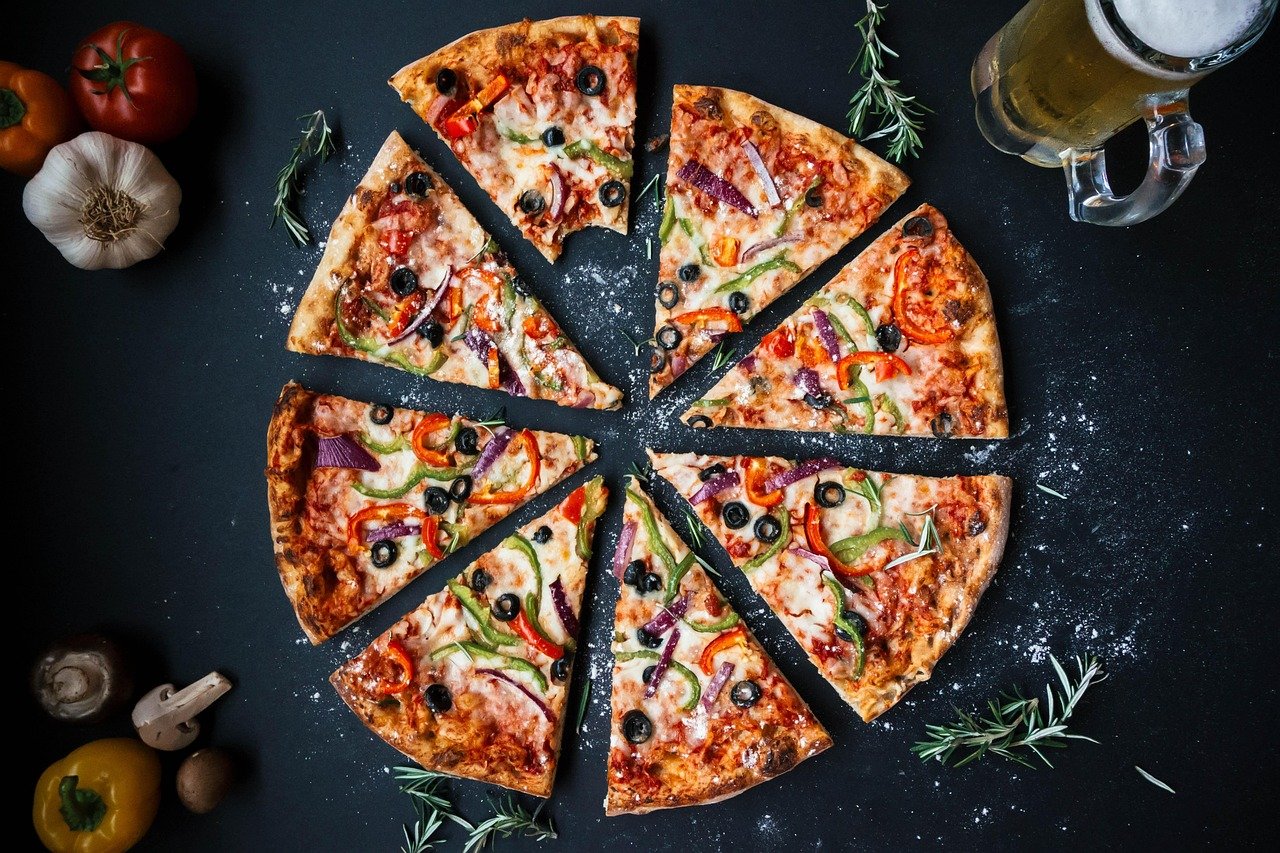
Here is a fact that surprises many people. The idea of putting toppings on flatbread is thousands of years old. But the pizza we know today, with tomato sauce and cheese, is much younger.
Where it started: Flatbreads with oil, herbs, and simple toppings existed in ancient Greece and Egypt. But modern pizza, as most people picture it, comes from Naples, Italy.
The history: Naples in the 1700s and 1800s was a busy, crowded port city. Poor workers needed food that was cheap, quick, and filling. Flatbread topped with tomatoes, garlic, oil, and cheese fit the bill perfectly. Tomatoes had only recently arrived in Italy from the Americas, so this was already a dish shaped by global trade.
The famous myth: The most repeated story says that in 1889, a Naples pizza maker named Raffaele Esposito created a new pizza for Queen Margherita of Savoy. He topped it with tomato, mozzarella, and basil to match the red, white, and green of the Italian flag. She loved it, and it was named Pizza Margherita in her honor.
What the evidence shows: This is a lovely story, but food historians have not been able to confirm it happened this way. Written records show that pizza with tomato, cheese, and basil already existed in Naples decades before 1889. Some historians even doubt the royal visit story took place as it is usually told. The queen probably did enjoy Neapolitan pizza, but the exact tale of Esposito naming it after her cannot be fully proven.
How it went global: Pizza traveled to the world mainly through Italian immigrants, especially to the United States in the late 1800s and early 1900s. Once in America, it changed a lot. Chicago created a thick, deep-dish version. New York kept it thin and foldable. Other countries added their own local toppings, from corn in Japan to paneer in India.
What it teaches us: Pizza shows how a simple, cheap food for poor city workers can become one of the most loved dishes on Earth, changing shape in every new place it lands.
2. Sushi
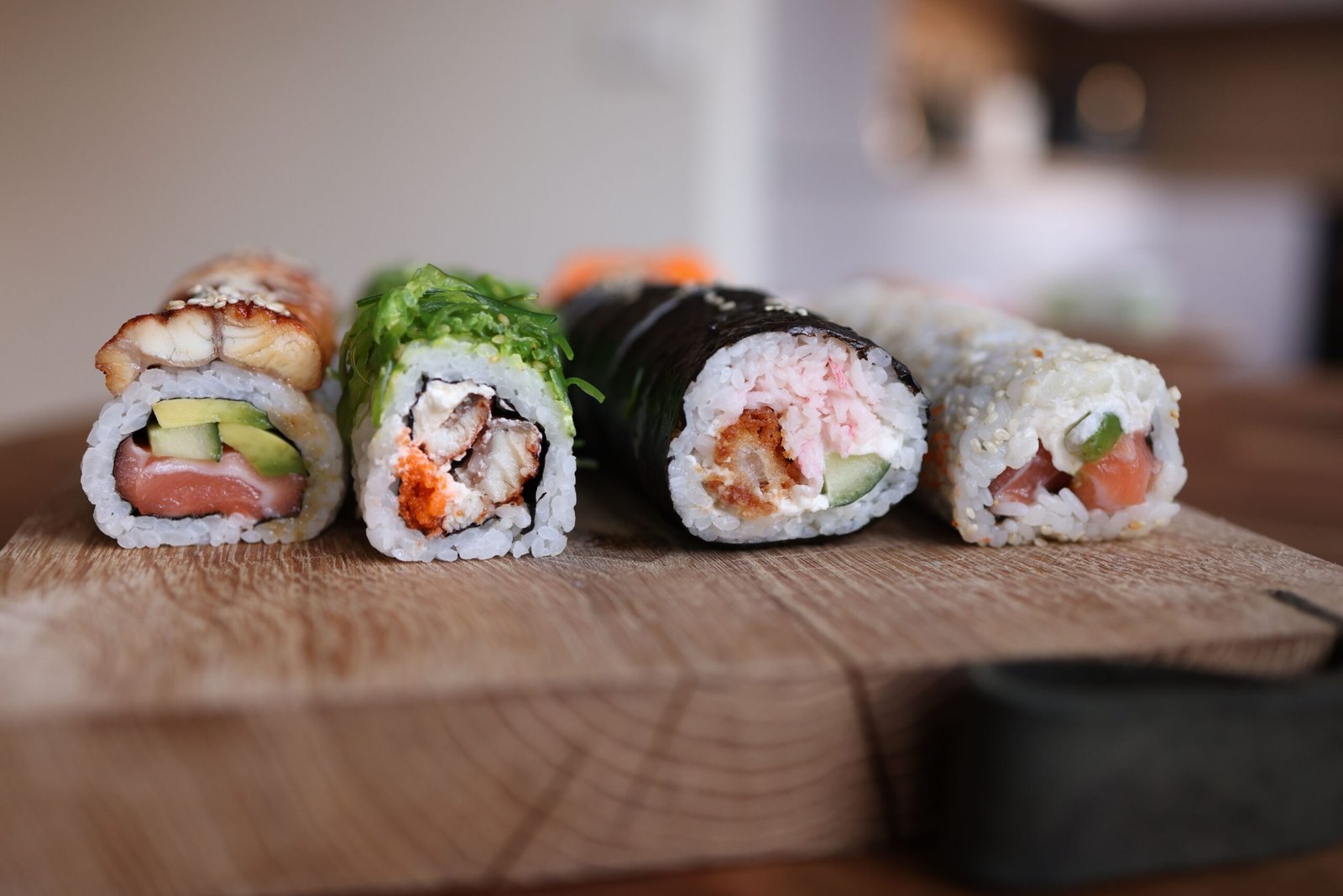
Most people think of sushi as raw fish on rice. But that is actually a fairly modern version. The original idea had nothing to do with eating fresh fish at all.
Where it started: Sushi’s roots are often traced to Southeast Asia, not Japan. An old method called narezushi involved packing fish in fermented rice to preserve it for months. The rice was often thrown away. Only the preserved fish was eaten.
The history: This preservation method reached Japan over a thousand years ago. Over centuries, the Japanese changed it step by step. Eventually, people began eating the rice along with the fish and started using vinegar to speed up the process instead of waiting for natural fermentation.
How it became the sushi we know: The sushi most people recognize today, nigiri, small hand-pressed rice topped with fish, is believed to have developed in Edo (modern-day Tokyo) in the early 1800s. It was fast food for busy city workers, similar in spirit to how pizza started in Naples.
A common myth: Many people assume sushi has always meant “raw fish.” In fact, the word “sushi” refers to the vinegared rice, not the fish. Some sushi has no raw fish at all.
How it went global: Sushi spread internationally mainly after the 1970s, helped by Japanese restaurants opening abroad and by inventions like the California roll, created in the United States to suit local tastes that were unfamiliar with raw fish and seaweed.
What it teaches us: Sushi shows how a food preservation technique, born out of necessity, can slowly transform into refined, celebrated cuisine.
3. Tacos
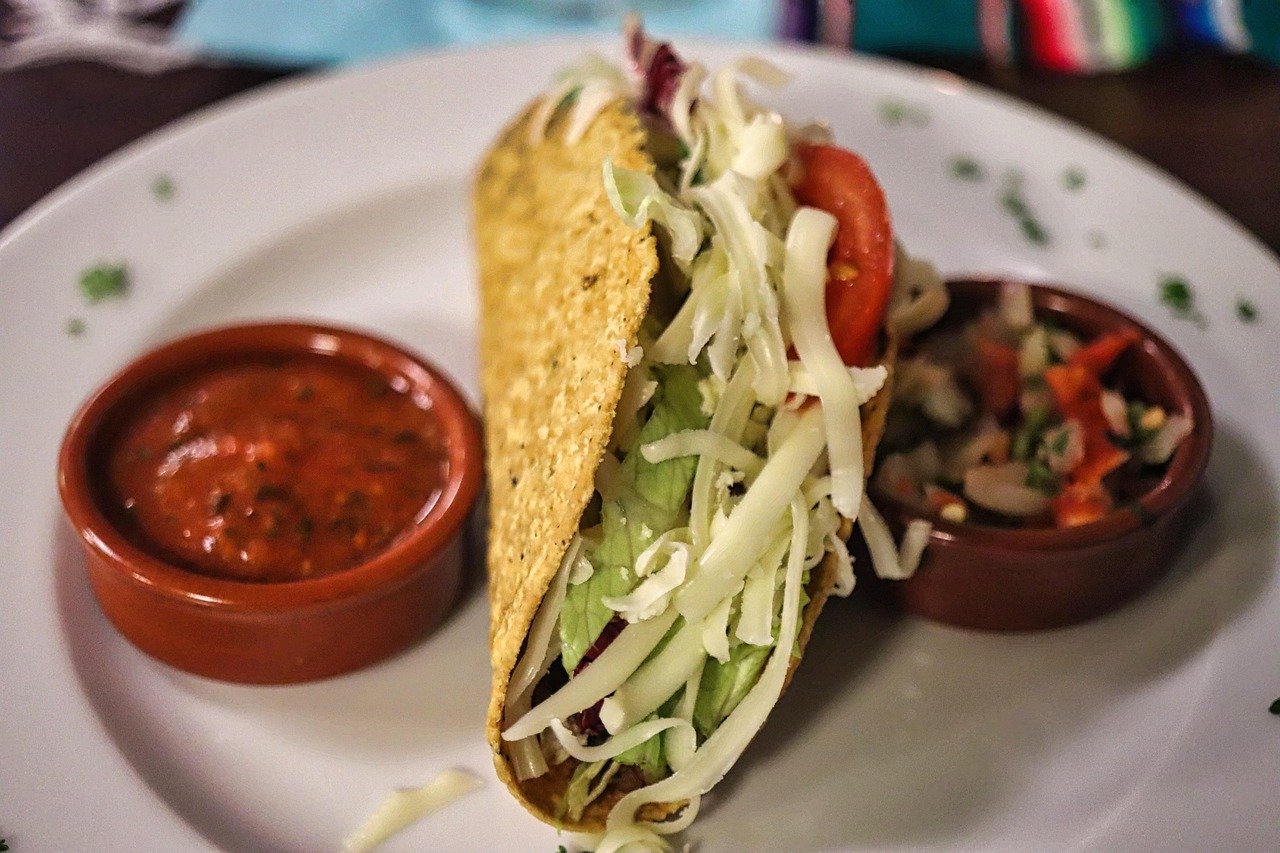
The taco feels timeless, but pinning down its exact birth is tricky, because tortillas and simple fillings have existed in Mexico for a very long time.
Where it started: Corn tortillas date back thousands of years in Mesoamerica, long before European contact. Wrapping food in a tortilla is a natural, practical idea that likely developed independently in many communities.
The history: The word taco itself is newer than the food. Some historians link the word to Mexican silver mines in the 1700s and 1800s, where “taco” described a small charge of gunpowder wrapped in paper, a similar shape to a wrapped tortilla. This is a popular theory, though not something everyone agrees on with full certainty.
Migration’s role: Tacos changed a great deal after Mexican migration to the United States in the 1900s. Fillings adapted to available ingredients. Fast food chains later created their own simplified, crunchy-shelled versions that many people outside Mexico now assume are the “real” taco.
A common myth: Many people believe the hard, crunchy taco shell is the traditional, original version. In most of Mexico, tacos are traditionally made with a soft tortilla.
What reliable evidence tells us: Historians are confident tortilla-based food is ancient in Mexico. They are far less certain about exactly when and how the specific word and format we call “taco” came together.
How it went global: Mexican migration to the US, followed by fast food chains and food trucks, carried tacos around the world. Local cooks everywhere now add their own fillings, from Korean barbecue to Indian paneer.
What it teaches us: Tacos show how something ancient and something modern can blend into one dish, and how a food can be reshaped so much abroad that it looks different from its origin.
4. Pasta
Ask people where pasta comes from, and almost everyone will say Italy. That is true today. But the deeper story is more complicated.
Where it started: Dried noodle-like foods appear in ancient Chinese, Arab, and Mediterranean history. Archaeologists have found noodle remains in China dating back thousands of years, made from grains other than wheat.
A famous myth: Many people believe Marco Polo brought pasta to Italy from China in the 1200s. This story is widely repeated but not supported by strong historical evidence.
What the evidence shows: Written records suggest dried pasta was already present in Sicily and southern Italy before Marco Polo’s travels, likely introduced through trade with Arab traders in the Mediterranean region. Durum wheat, ideal for making dry pasta, was cultivated in the area for centuries.
The history of pasta became central to Italian food culture gradually, especially once tomatoes arrived from the Americas in the 1500s and 1600s. Tomato sauce, now seen as a classic pasta pairing, is a relatively recent addition.
How it changed over time: Italy developed hundreds of regional pasta shapes, each suited to different sauces and local traditions. Fresh egg pasta in the north, dried durum wheat pasta in the south.
How it went global: Italian immigrants carried pasta worldwide in huge numbers during the 1800s and 1900s, especially to the Americas. Local adaptations followed everywhere, from Japanese spaghetti with ketchup to American spaghetti and meatballs, a dish barely eaten in Italy itself.
What it teaches us: Pasta reminds us that popular legends, even charming ones like the Marco Polo story, do not always match written history. It pays to ask what the evidence actually shows.
5. Ramen
Ramen feels deeply Japanese today. But its origin story actually starts across the sea.
Where it started: Ramen is widely believed to have developed from Chinese wheat noodle dishes, brought to Japan by Chinese immigrants and traders, likely gaining wider popularity in the late 1800s and early 1900s.
The history: Early ramen in Japan was often sold at small stalls, especially after World War II, when wheat flour aid from the United States made noodles cheap and easy to produce during a period of food shortage.
Cultural exchange: This is a clear example of a dish shaped directly by international trade, migration, and postwar history. Japanese cooks took Chinese noodle traditions and reworked them with local broths, toppings, and flavors, eventually creating something distinctly Japanese.
How it changed: Ramen exploded into countless regional styles across Japan. Miso ramen, soy sauce ramen, and rich pork bone tonkotsu ramen all developed in different regions with their own local pride attached.
A common myth: Some assume ramen is an ancient, traditional Japanese food. In reality, the ramen most people eat today is a relatively modern dish, heavily shaped by 20th century events.
How it went global: Instant ramen, invented in Japan in 1958, made the dish famous worldwide almost overnight, becoming one of the most eaten foods on the planet.
What it teaches us: Ramen shows how hardship, in this case, postwar food shortages, can push a country to create something that later becomes a source of national pride and global comfort food.
6. Croissant
The croissant feels as French as the Eiffel Tower. Its real story begins in Austria.
Where it started: The croissant’s ancestor is the Austrian kipferl, a crescent-shaped pastry. Written records show the kipferl existed by at least the 1200s, centuries before the croissant became famous in France.
A famous myth: A popular story claims the crescent shape celebrates a Viennese victory over Ottoman forces in 1683, with bakers shaping the pastry like the crescent moon on the Ottoman flag. Another popular story says Marie Antoinette brought the kipferl to France when she married into French royalty.
What the evidence shows: Most food historians consider both of these tales to be later legends rather than documented fact. The siege story does not appear in writing until the 20th century, long after the supposed event. There is no solid evidence connecting Marie Antoinette directly to introducing it in France either.
What is better documented An Austrian named August Zang opened a Viennese-style bakery in Paris in the mid 1800s. French bakers then adapted the kipferl using French laminated puff pastry techniques, creating the light, flaky texture people now associate with croissants. This is a much better documented turning point than the royal legends.
How it changed: The modern flaky croissant, made with layers of butter folded into the dough, is considered a French innovation on top of the older Austrian pastry.
How it went global: French bakeries and, later, mass production and frozen dough technology in the 1980s, helped croissants become a breakfast staple far beyond France.
What it teaches us: The croissant is a good reminder that a food closely tied to one country’s identity may have been shaped somewhere else entirely.
7. Curry
Curry might be the trickiest dish on this list, because the word means different things in different places.
Where it started, Curry is not really one dish. It is a broad term, largely popularized by British colonizers in India, used to describe a wide range of Indian dishes made with spiced sauces. Indian cooking itself has an ancient and enormously varied tradition of spiced dishes that long predates the word curry.
The history: The word likely comes from a Tamil word, kari, referring to a spiced sauce or relish. British traders and colonial officials in India adopted the term loosely, then carried it back to Britain and used it to label many different regional Indian dishes under one simple name.
Migration and trade: Curry spread with British colonial trade routes to places like the Caribbean and East Africa, where South Asian indentured laborers and migrants also carried their own cooking traditions, creating entirely new regional curry styles, such as Caribbean curry goat.
A common myth: Many outside South Asia imagine curry as one specific dish or flavor. In South Asia itself, there is no single “curry.” There are hundreds of distinct regional dishes with their own names, spice blends, and techniques.
How it went global: British colonial history, followed by South Asian migration worldwide, made curry one of the most recognized food words on Earth. Japan even developed its own hugely popular version, Japanese curry, after adopting a British-style recipe in the 1800s.
What it teaches us: Curry shows how a colonial label can flatten a rich and varied cooking tradition into one simple word, while also spreading that tradition, in changed form, around the world.
8. Hamburger
Everyone assumes the hamburger comes from Hamburg, Germany. The real story is messier, and more American than the name suggests.
Where it started: The name likely connects to “Hamburg steak,” a seasoned ground beef dish associated with the German port city, which German immigrants brought to the United States in the 1800s.
A famous myth: A well-known story credits a Danish immigrant, Louis Lassen, with inventing the hamburger sandwich in New Haven, Connecticut, around 1900, by placing a ground beef patty between two slices of toast.
What the evidence shows: This story is widely told and even recognized by some official records, but many food historians dispute it. Newspaper ads and menus from the 1890s already mention hamburger sandwiches in other parts of the United States, including claims from Texas, Wisconsin, and New York State. No single inventor can be confirmed with full certainty.
How it changed: The hamburger evolved from a simple sandwich into a bun-based, mass-produced food, especially once fast food chains began standardizing it in the 1900s.
How it went global: American fast food chains, especially from the mid 1900s onward, spread the hamburger to nearly every country in the world, where it has since been adapted with local flavors and ingredients, from teriyaki burgers in Japan to paneer burgers in India.
What it teaches us: The hamburger shows how national food origin stories are often debated rather than settled, and how a dish’s popularity can outpace our certainty about who actually invented it.
9. Dumplings
Dumplings appear in almost every food culture on Earth, which makes their history one of the most interesting on this list.
Where it started: Wrapping a filling in dough is such a simple, useful idea that it likely developed independently in several places. China has a very long dumpling tradition, with jiaozi believed to date back well over a thousand years.
The history: From China, dumpling-style cooking is believed to have spread along trade routes into Central Asia and beyond, influencing dishes like Mongolian buuz, Nepali momos, and possibly even Italian ravioli and Turkish manti, though exact connections between all these dishes remain debated among historians.
A common myth: Many assume all dumpling dishes around the world trace back directly to China. While Chinese dumplings clearly spread widely through trade, some dumpling traditions in Europe and the Middle East may have developed on their own, since wrapping food in dough is not a uniquely Chinese idea.
How it changed: Every region adapted dumplings to local ingredients. Polish pierogi, Georgian khinkali, Japanese gyoza, and Jewish kreplach all share the same basic concept but taste completely different.
How it went global: Trade, migration, and simple culinary logic (a filling wrapped in dough is easy to cook, store, and carry) spread dumplings across nearly every continent long before modern globalization.
What it teaches us: Dumplings show that similar food ideas can appear in different cultures without one necessarily copying the other. Sometimes people just solve the same problem in a similar way.
10. Pho
Pho is often described as Vietnam’s national dish. Its ingredients tell a quieter story about French colonial history.
Where it started: Pho developed in northern Vietnam, likely in the late 1800s or early 1900s, in and around Hanoi.
Cultural exchange: Many food historians believe pho was shaped by French colonial presence in Vietnam. The French brought a stronger culture of eating beef, which was less common in traditional Vietnamese cooking at the time. Some historians also see a connection to French pot au feu, a beef and broth dish, though this link is debated rather than fully confirmed.
The history: Whatever its exact roots, pho combined Vietnamese herbs, rice noodles, and broth-making techniques with beef, which became more widely available under French rule.
A common myth: Some assume pho is an ancient dish stretching back centuries in Vietnam. Most historians place its development much more recently, within the last 150 years or so.
How it changed: After Vietnam was divided in 1954, many people migrated south, carrying pho recipes with them. Southern Vietnamese pho became sweeter and added more herbs and bean sprouts, creating a real regional divide within the country itself.
How it went global: The Vietnam War led to large waves of Vietnamese refugees moving to countries like the United States, Australia, and France in the 1970s. They brought pho with them, and it has since become one of the most recognized Vietnamese dishes worldwide.
What it teaches us: Pho shows how colonization, war, and migration, though painful chapters of history, can also lead to the creation and spread of a beloved dish.
11. Paella
Paella looks simple, rice with a few ingredients, but it holds centuries of Mediterranean trade history in one pan.
Where it started: Paella comes from the Valencia region of Spain, an area with fertile farmland well suited to growing rice.
The history: Rice itself was introduced to Spain by Moors from North Africa during their long presence on the Iberian Peninsula, roughly from the 8th to the 15th century. This is a key, well-documented piece of the dish’s story.
How it developed: Traditional Valencian paella began as a farmers’ and laborers’ meal, cooked outdoors over an open fire using whatever local ingredients were on hand, often rabbit, chicken, snails, and beans, rather than the seafood many people associate with paella today.
A common myth: Many people outside Spain believe paella always includes seafood as its main feature. Traditional Valencian paella is often made without seafood at all. Seafood paella is a coastal variation that became especially popular with tourists.
How it changed: As paella’s fame grew, especially through tourism in the 1900s, seafood and mixed versions spread widely, sometimes drifting quite far from the traditional Valencian recipe that locals still take pride in protecting.
How it went global: Spanish cuisine’s international popularity, tourism to Spain, and Spanish-speaking communities abroad all helped spread paella across the world.
What it teaches us: Paella is a good example of how a dish closely tied to local farming and geography can be shaped, centuries earlier, by cross-cultural contact, in this case, the introduction of rice through North African influence.
12. Fried Chicken
Fried chicken’s story in the United States is closely tied to some of the most difficult parts of American history, and it deserves to be told carefully.
Where it started: Frying chicken as a cooking method appears in various forms across many cultures long before it became associated with the American South, including in parts of Europe and West Africa.
The history Historians point to two major influences on Southern fried chicken in America. Scottish immigrants had a tradition of deep frying chicken in fat. Enslaved West Africans, who were often only permitted to raise chickens as their own livestock, developed their own frying techniques and used seasonings drawn from West African cooking traditions.
A common myth and ongoing debate: The story that Scottish settlers taught enslaved African cooks a fixed “fried chicken recipe” is a popular one, but some historians argue this oversimplifies things and may not be fully accurate. Some researchers argue certain “Scottish fried chicken” claims rest on a misunderstanding of old Scottish recipe names. What most historians agree on is that enslaved African American cooks played the central role in shaping and popularizing the dish as it is known in the American South today.
How migration and history shaped it: After the American Civil War, fried chicken became an important source of income for many formerly enslaved Black women, who sold it, including at railway stations, to travelers passing through the South.
How it went global: In the 1900s, fast food chains, most famously Kentucky Fried Chicken, took fried chicken worldwide, where it has since been given countless local twists, from Korean double-fried chicken to Japanese karaage.
What it teaches us: Fried chicken’s history reminds us that some of the world’s favorite comfort foods carry difficult histories of slavery and hardship, alongside real stories of resilience and skill.
13. Biryani
Ask someone from Hyderabad, Lucknow, or Kolkata where biryani comes from, and you may get three different, equally passionate answers.
Where it started: The word “biryani” likely comes from Persian words related to frying or roasting rice. Most historians trace the roots of biryani to Persian pilaf traditions, brought into South Asia over centuries of trade and, later, through the Mughal Empire, which ruled large parts of the Indian subcontinent from the 1500s to the 1800s.
A famous myth: A popular story credits Mumtaz Mahal, the Mughal empress remembered for the Taj Mahal, with inventing biryani after seeing malnourished soldiers and asking cooks to create a single nutritious meal of meat and rice.
What the evidence shows: This is a charming story, but historians have not been able to confirm it as documented fact. What is better supported is that Persian-style rice and meat dishes blended with existing South Asian rice traditions over a long period, developing into the layered, spiced dish now known as biryani. Some historians also point to older South Asian rice and meat traditions, mentioned in ancient Tamil literature, suggesting biryani may be a genuine fusion rather than a dish imported wholesale from Persia.
How it changed: As biryani spread across the Indian subcontinent, powerful regional courts and communities created their own distinct versions. Hyderabadi biryani, developed under the Deccan sultanates, is famously spicy and layered. Lucknow’s version is lighter, cooked using a technique where rice and meat are prepared separately before being combined.
How it went global: South Asian migration across the world, along with the popularity of South Asian restaurants, has carried biryani to nearly every continent, with each new community often adding its own local touch.
What it teaches us: Biryani shows how honest historians often say “we are not fully sure,” even about a dish loved by hundreds of millions of people, and that uncertainty does not make the dish any less rich in meaning.
14. Kimchi
Kimchi is now internationally recognized as a symbol of Korean food culture. Its story is really about clever, patient food preservation.
Where it started: Fermenting vegetables in Korea dates back well over a thousand years, originally as a practical way to preserve food through harsh winters, long before refrigeration existed.
The history: Early kimchi did not include the fiery red chili flavor most people associate with it today. Chili peppers arrived in Korea only after contact with the Americas, likely introduced through trade routes in the 1500s and 1600s. Red pepper-based kimchi, the style now most famous worldwide, developed after that point.
A common myth: Many assume kimchi has always been spicy and red. In fact, for a large part of its long history, kimchi was made without chili at all.
How it changed: There are hundreds of regional and seasonal kimchi varieties in Korea, made from different vegetables, not just cabbage, reflecting local climate, available ingredients, and family traditions passed down for generations.
How it went global: Korean migration worldwide, along with the more recent global rise of Korean pop culture and cuisine, has helped kimchi become widely known and appreciated internationally, including recognition of Korea’s kimchi-making traditions by UNESCO as an important piece of cultural heritage.
What it teaches us: Kimchi shows how necessity, in this case, surviving cold winters without modern refrigeration, can lead to a food tradition that later becomes a proud symbol of national identity.
15. Bread
Bread might be the oldest and most widespread food story of all. It is also one of the clearest examples of food connecting nearly every human culture on Earth.
Where it started: Archaeological evidence suggests some form of bread making, using ground grains and water, dates back tens of thousands of years, well before the rise of farming itself.
The history: Bread became far more central to human diets once agriculture developed, roughly ten thousand years ago, in regions like the Fertile Crescent in the Middle East. Ancient Egyptians are credited by many historians with developing some of the earliest leavened, or risen, bread using natural yeast.
A common myth: Many assume bread was always made the same simple way. In reality, different cultures independently invented very different bread styles, from flat unleavened breads in South Asia and the Middle East to risen loaves in Europe, shaped by local grains, climate, and available fuel for baking.
How trade shaped it: Wheat, the grain most associated with Western bread, spread widely through ancient trade routes. Other cultures built their bread traditions around different grains entirely, such as rice, corn, or millet, depending on what grew well locally.
How it changed over time: Bread evolved constantly, from dense ancient loaves to today’s huge variety, sourdough, baguettes, naan, injera, tortillas, and countless others, each carrying its own regional history and technique.
How it went global: Because grain farming and bread making are so old and so widespread, bread became common across nearly every continent independently, later spreading further through colonization, trade, and migration.
What it teaches us: Bread reminds us that some of humanity’s most basic foods were never invented once by one culture. They were invented, again and again, by people all over the world solving the same simple problem: how to turn grain into something nourishing.
Conclusion
Fifteen dishes, and not one of them tells a simple story.
Pizza carries the memory of poor Neapolitan workers and Italian immigrants. Pho carries the weight of colonization and war. Fried chicken carries both hardship and resilience. Bread carries almost the entire story of human civilization itself.
The next time you sit down to eat, it might be worth asking a simple question. Where did this dish really come from, and who carried it here?
You may be surprised by the answer. You will almost certainly find people, not just recipes, at the center of the story.
Frequently Asked Questions
What is the oldest dish still eaten today?
Bread, in some simple form, is likely one of the oldest foods still eaten today, with evidence suggesting basic grain-based bread existed tens of thousands of years ago, long before farming began.
Is the Marco Polo pasta story true?
Most food historians say no. Evidence suggests pasta was already present in Sicily and southern Italy before Marco Polo’s travels to China, likely introduced through earlier trade with Arab traders.
Did Queen Margherita really inspire Pizza Margherita?
This is a widely told story, but historical evidence doesn’t fully confirm it. Pizza with tomato, mozzarella, and basil is documented in Naples before the queen’s supposed 1889 visit, so the exact origin of the name remains uncertain.
Why do so many cultures have their own version of dumplings?
Wrapping a filling in dough is a simple, practical cooking idea. It likely developed independently in several regions, while trade routes also helped spread dumpling traditions between cultures like China, Central Asia, and Europe.
Is curry one dish or many dishes?
Curry is not one dish. It is a broad term, popularized during British colonial rule in India, used to describe a huge range of distinct South Asian dishes with their own individual names, spices, and cooking methods.
Why did kimchi become spicy if it wasn’t always that way?
Chili peppers were not available in Korea until they arrived through global trade routes after contact with the Americas, around the 1500s and 1600s. Before that, kimchi was fermented without chili.
How did migration change famous dishes like pho and tacos?
Migration often forces dishes to adapt to new ingredients, tastes, and communities. Pho changed as people moved within Vietnam and later abroad as refugees. Tacos changed significantly once they became popular in the United States, leading to variations like the hard-shell taco that are less common in Mexico itself.
Suggested External Sources
- Smithsonian Magazine, food history archives
- The Metropolitan Museum of Art, culinary and cultural history resources
- University-affiliated food history research (e.g., published works by culinary historians such as Lizzie Collingham)
- UNESCO Intangible Cultural Heritage listings (for dishes like kimchi)
- National food museums and heritage associations (e.g., Associazione Verace Pizza Napoletana for pizza)
- Reputable culinary history publications (e.g., Gastronomica journal)
- Established food history writers and cookbooks with documented sourcing
- Library of Congress historical food and culture records