
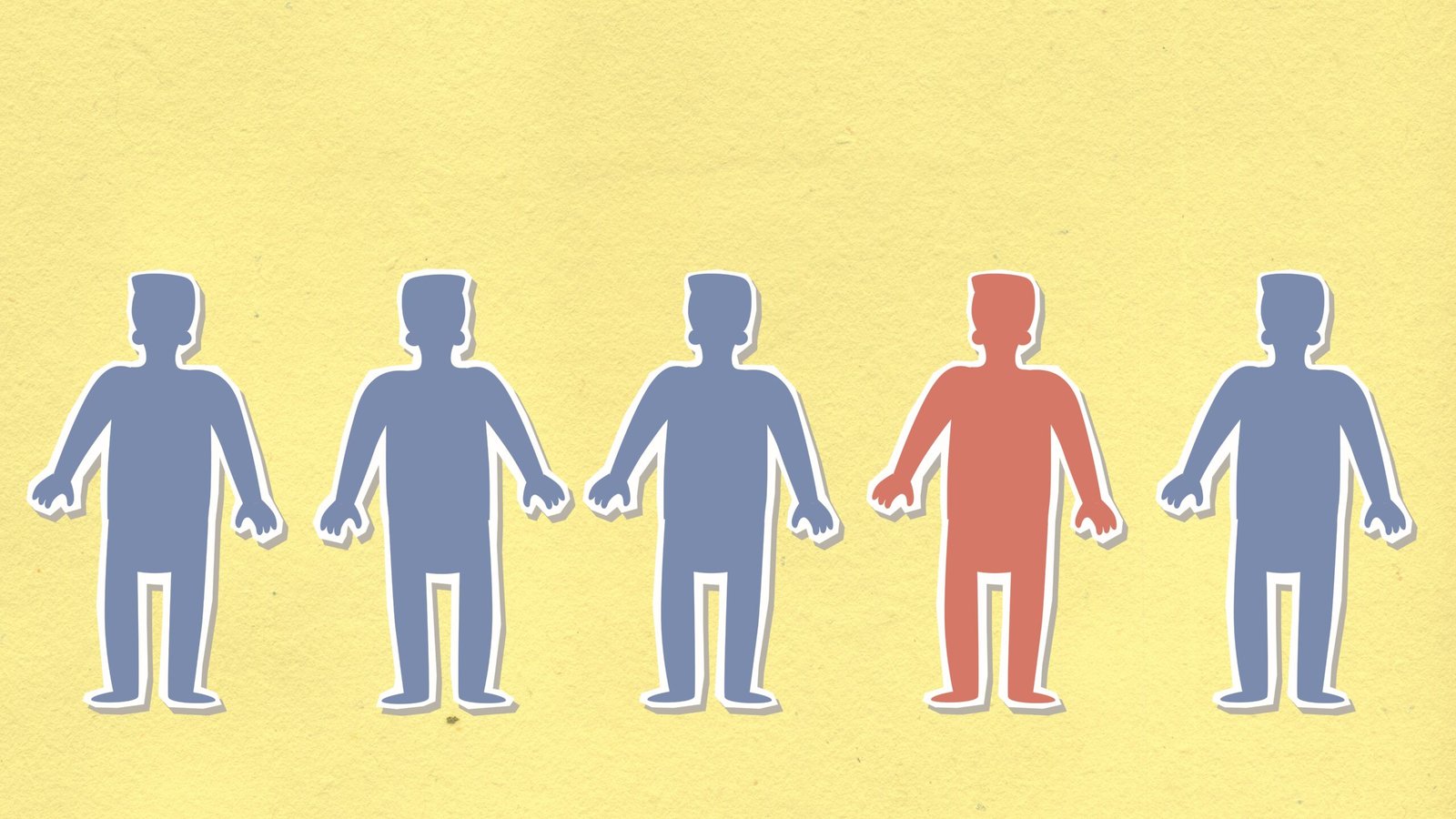

Imagine you’re 30. You’ve just been offered a place on a design course you’ve wanted for years. At dinner, your uncle asks when you’ll finally “settle” into a proper job. Your mother is quiet, which is somehow worse than if she’d argued. Later, your friend posts a photo of a new apartment and a promotion, and you feel your stomach drop.
You don’t actually believe that a stable, respectable career is the only way to live a good life. But you still find yourself drafting a polite message to decline the course.
If you’ve ever acted against your own preferences and wondered why, you’re not weak or confused.
Understanding why we feel pressured to follow society’s expectations, even when we don’t agree with them, helps us understand ourselves better.
The answer is not one thing. It is a mix of how human brains evolved, how we’re raised, and how modern life keeps us constantly in view of other people.
This blog explains the psychology behind it, what it costs, and how to respond without burning your relationships down.
What Are Society’s Expectations?
Societal expectations are the unwritten rules about how a person “should” live: which career is respectable, when to marry, how to dress, what success looks like, how much to earn, how to treat elders.
Psychologists often call the shared versions of these rules social norms.
They come from many places at once: family, religion, culture, school, friends, workplaces, and now algorithms. Most are never said out loud.
You learn to accept these expectations over time, often without even realizing it.
It’s worth saying clearly: social norms aren’t the enemy. Queuing, saying thank you, and showing up when you promised are norms, and they make shared life work. The problem isn’t that expectations exist. It is when they quietly replace your own judgment on questions that are genuinely yours to answer, like who you marry, what you study, or what you do with your time.
Why Do We Feel Pressure to Follow Society’s Expectations?
For most of human history, being part of a group helped people survive.
Being cast out of the group was dangerous. Humans who were sensitive to the group’s approval were more likely to stay connected and protected.
That’s an interpretation of evolutionary psychology, so hold it lightly. But there is solid support for the underlying idea. In a widely cited 1995 paper, Roy Baumeister and Mark Leary argued that the need to belong is a fundamental human motivation, not a luxury. We don’t just like being accepted. We’re built to need it.
So when you feel pressure to conform, you’re not being shallow. A very old system is doing what it was designed to do: protect your place in the group. The trouble is that this system can’t tell the difference between “my tribe will abandon me” and “my aunt will gossip about me.”
The Psychology Behind Social Pressure
Several well-studied ideas help explain what’s happening inside you.
Belonging.
As above, the drive to be accepted is deep. Anything that threatens it feels bigger than the situation seems to warrant.
Fear of rejection.
Being rejected can hurt so much that it feels like physical pain. In a well-known 2003 study in Science, Naomi Eisenberger and colleagues found that being excluded in a simple online ball-tossing game activated brain regions that overlap with those involved in physical pain and distress. How far to push that comparison is still debated, but it fits what most of us feel: being left out hurts, and we’ll go to some lengths to avoid it.
Social proof.
When we’re unsure what to do, we look at what others are doing and assume it’s right. If everyone around you is getting engaged, buying property, or chasing a certain kind of job, that behavior starts to feel like evidence about what you should want.
Cultural conditioning.
Long before you could evaluate any expectation, you were absorbing it through stories, praise, and disapproval. That’s why some beliefs feel like “just who I am” when they’re really inherited. Cultures differ in what they emphasize. Many place a high value on family duty and community harmony, which can be a genuine source of meaning and support. That’s not something to dismiss. It just means the pressure can feel heavier when the people you’d disappoint are the people you love most.
The need for approval.
Approval feels good, and disapproval feels bad, so we adjust our behavior to collect the first and avoid the second, often without noticing.
Normative social influence.
This term, introduced by Morton Deutsch and Harold Gerard in 1955, describes going along with a group to be accepted or liked, as opposed to going along because you’ve been persuaded they’re right.
Group pressure.
In Solomon Asch’s classic line-judgment experiments in the 1950s, participants often gave an obviously wrong answer to match a unanimous group, at least some of the time. Notably, many didn’t conform every time, and many later said they knew the answer was wrong. Robert Cialdini and Noah Goldstein’s 2004 review in the Annual Review of Psychology gives a good overview of how these forces work in everyday life.
One distinction matters a great deal here: conformity is not agreement. You can comply outwardly while disagreeing privately. You attend the wedding you don’t want to attend, laugh at the joke you find unkind, or accept the job title that doesn’t fit. Public compliance with private disagreement is exactly what normative influence produces, and it’s where the inner tension comes from.
Why Disagreeing Feels So Difficult
If you disagree with society’s expectations, why not just say so? Because speaking up can come with consequences.
Think about marriage and age. Imagine a 32-year-old woman who isn’t sure she wants to marry anytime soon. In some families, an age is quietly treated as a deadline. Saying “I’m in no hurry” doesn’t feel like a neutral statement. It can feel like questioning the whole family’s values, inviting worry, and being labeled difficult. So she smiles through the matchmaking suggestions and says nothing.
Or choosing a career. A student who wants to pursue music in a family of engineers or doctors is not just choosing a job. They may feel they’re rejecting the sacrifices their parents made. The fear isn’t really “will I be good at this?” It’s “will I be seen as ungrateful?”
Three things make disagreeing especially hard:
- The costs are immediate and visible, such as a tense dinner or a disappointed face. The benefits of living authentically arrive slowly and quietly.
- Doubt creeps in. When many people disagree with you, it is natural to wonder whether you are the one who is wrong.
- Loyalty gets tangled up with obedience. Many of us learn that being a good son, daughter, friend, or citizen means going along. Setting that apart takes deliberate effort.
How Social Media Makes It Worse
Social media did not invent social pressure, but it changed the scale. Instead of comparing yourself with a few dozen people in your neighborhood, you’re comparing yourself with thousands of carefully selected highlight reels.
Leon Festinger’s 1954 social comparison theory says we evaluate ourselves by comparing ourselves with others. Online, that comparison never switches off. Research such as Vogel and colleagues’ 2014 study in Psychology of Popular Media Culture has linked more frequent social media use, especially upward comparison, with lower self-esteem. The relationship is complicated and not every user is affected in the same way, but the pattern fits what many people describe.
Some everyday examples:
- Appearance and body image. You scroll past edited photos and filtered faces and start to feel your ordinary body is a problem to fix.
- Looking successful. A friend posts a new car or a launch announcement. You don’t see the debt, the doubt, or the bad weeks behind it, only the finished image. Soon you feel pressure to perform success too, even if you’re quietly struggling.
- Income and status. Salaries, side hustles, and “I quit my job and made it” stories can make an ordinary income feel like a failure, even when it covers your life well.
Social media also adds something new: you’re not only pressured to be a certain way, but to be seen being that way.
The Cost of Living for Other People’s Approval
Occasionally going along with others is part of normal life. The trouble starts when it becomes the default. Societal pressure and mental health are linked, though not in a way that guarantees any particular outcome. For some people, living mainly to satisfy others can contribute to:
- Anxiety. Constantly scanning for what others will think keeps your mind on alert.
- Self-doubt. When you rarely act on your own judgment, it is hard to trust it.
- Resentment. Quiet anger builds toward the people you’re trying to please, and often toward yourself.
- Burnout. Maintaining a performance of a life you don’t want is exhausting.
- A loss of identity. After years of fitting expectations, you may struggle to answer a simple question: what do I actually want?
None of this is inevitable, and it isn’t a diagnosis. If you recognize yourself in this list and it’s affecting your daily life, talking to a qualified mental health professional can help.
How to Respond Without Rejecting Every Norm
Learning how to break free from societal expectations does not mean rebelling against everything. Rebellion is just another form of being controlled by the norm, because you’re still letting it decide what you do, only in reverse.
A better question than “Should I follow society or go against it?” is: “Does this expectation reflect something I actually value?”
You might find that you do value family closeness, financial stability, or tradition, and you want to honor them in your own way. You might also find an expectation that doesn’t fit at all. Both results are healthy. The point is that the choice becomes yours.
This is the heart of social expectations vs personal values: not winning an argument with society, but knowing which of your choices are really yours.
Practical Ways to Stay True to Your Values
If you’ve wondered how to stop caring what society thinks, the honest answer is that you probably won’t stop caring entirely, and you don’t need to. The aim is to care less automatically. Here’s a path that works step by step.
1. Name the expectation.
Be specific. “I feel pressure” is vague. For example, “My family wants me to choose a government job because they believe it’s the safest career option” is a pressure you can understand and work through.
Naming it takes away some of its fog.
2. Separate inherited beliefs from your own. Ask: Did I choose this belief, or did I absorb it? A useful test: imagine nobody would ever know or comment on your decision. Would you still choose it? Your answer is not final, but it is informative.
3. Recognize the fear behind compliance. Usually there is a feeling underneath: fear of rejection, of disappointing someone, of being judged, of being wrong. When you name it, it stops running the show. Why this helps: fears are much more manageable when you can see them clearly than when they masquerade as “obvious facts.”
4. Clarify your values and priorities. Write down three to five things that matter most to you, such as honesty, creativity, security, family, or health. Then check your major choices against them. Why this helps: values give you something to say yes to, which is far steadier than only saying no to others.
5. Set respectful, realistic boundaries. You don’t have to announce a revolution. Try small, calm statements:
- To a relative asking about marriage: “I know you ask because you care about me. I’m not ready to talk about it yet, but I’ll tell you when there’s news.”
- To family about a career choice: “I understand why this worries you. Here’s my plan, and here’s how I will make sure I’m okay. I’d like your support even if you don’t fully agree.”
- To friends pushing a lifestyle: “That’s not for me, but I’m glad it works for you.”
Notice the pattern: acknowledge their care, state your decision plainly, and don’t over-explain. You can disagree without turning it into a fight, and you’re allowed to keep a boundary even if someone stays unhappy about it.
6. Choose supportive people. You don’t have to cut anyone off, but notice who makes room for your real self and who only likes the edited version. Spend more time with the first group. Even one person who accepts your choices can make independence far less lonely.
7. Practice small, deliberate decisions. Independence is a skill. Start with low-stakes choices: order the food you actually want, wear what you like, spend a free evening your own way, state a mild opinion in a group chat.
Why this helps: each small decision builds evidence that you can disagree and the world won’t end, which makes bigger decisions less frightening.
A few last notes. Expect discomfort at first, since it usually means you’re doing something unfamiliar, not something wrong. Give family time too; some will soften when they see you’re thriving. And if the stakes are real, such as safety, serious conflict, or a decision you can’t take back, it’s wise to take your time and seek support.
Conclusion
So, why do we feel pressure to follow society’s expectations, even when we disagree? Because we’re wired to belong, because we absorb norms long before we can question them, and because rejection hurts in ways we’d rather avoid. Social media simply turns up the volume.
The central insight is that feeling the pressure doesn’t mean you must obey it, and resisting it doesn’t mean you must reject everyone. You can honor the norms that match your values, quietly let go of the ones that don’t, and treat your relationships with care as you do.
Here’s a question to carry with you: if no one were watching or judging, which of your current choices would you keep, and which would you change? I’d love to hear your thoughts in the comments.
Disclaimer: This article is for informational and educational purposes only and is not a substitute for professional mental health advice, diagnosis, or treatment. It was written with the assistance of AI and reviewed for accuracy, but errors or inaccuracies may still occur. Individual experiences may vary. If social pressure significantly affects your well-being, consider speaking with a qualified mental health professional.
References
- Baumeister, R. F., & Leary, M. R. (1995). The need to belong. Psychological Bulletin, 117, 497–529.
- Asch, S. E. (1956). Studies of independence and conformity. Psychological Monographs, 70(9).
- Deutsch, M., & Gerard, H. B. (1955). Normative and informational social influences. Journal of Abnormal and Social Psychology, 51, 629–636.
- Eisenberger, N. I., et al. (2003). Does rejection hurt? Science, 302, 290–292.
- Festinger, L. (1954). A theory of social comparison processes. Human Relations, 7, 117–140.
- Cialdini, R. B., & Goldstein, N. J. (2004). Social influence: Compliance and conformity. Annual Review of Psychology, 55, 591–621.
- Vogel, E. A., et al. (2014). Social comparison, social media, and self-esteem. Psychology of Popular Media Culture, 3, 206–222.