

Learn10 Lessons About Money, Wealth, and Financial Freedom
Two people can earn the same salary, live in the same city, and still end up with completely different financial lives. One retires early with a paid-off house and a full savings account. The other, despite earning just as much (sometimes more), is still living paycheck to paycheck in their fifties. Same income. Same opportunities, roughly speaking. Wildly different outcomes.
So what’s actually going on?
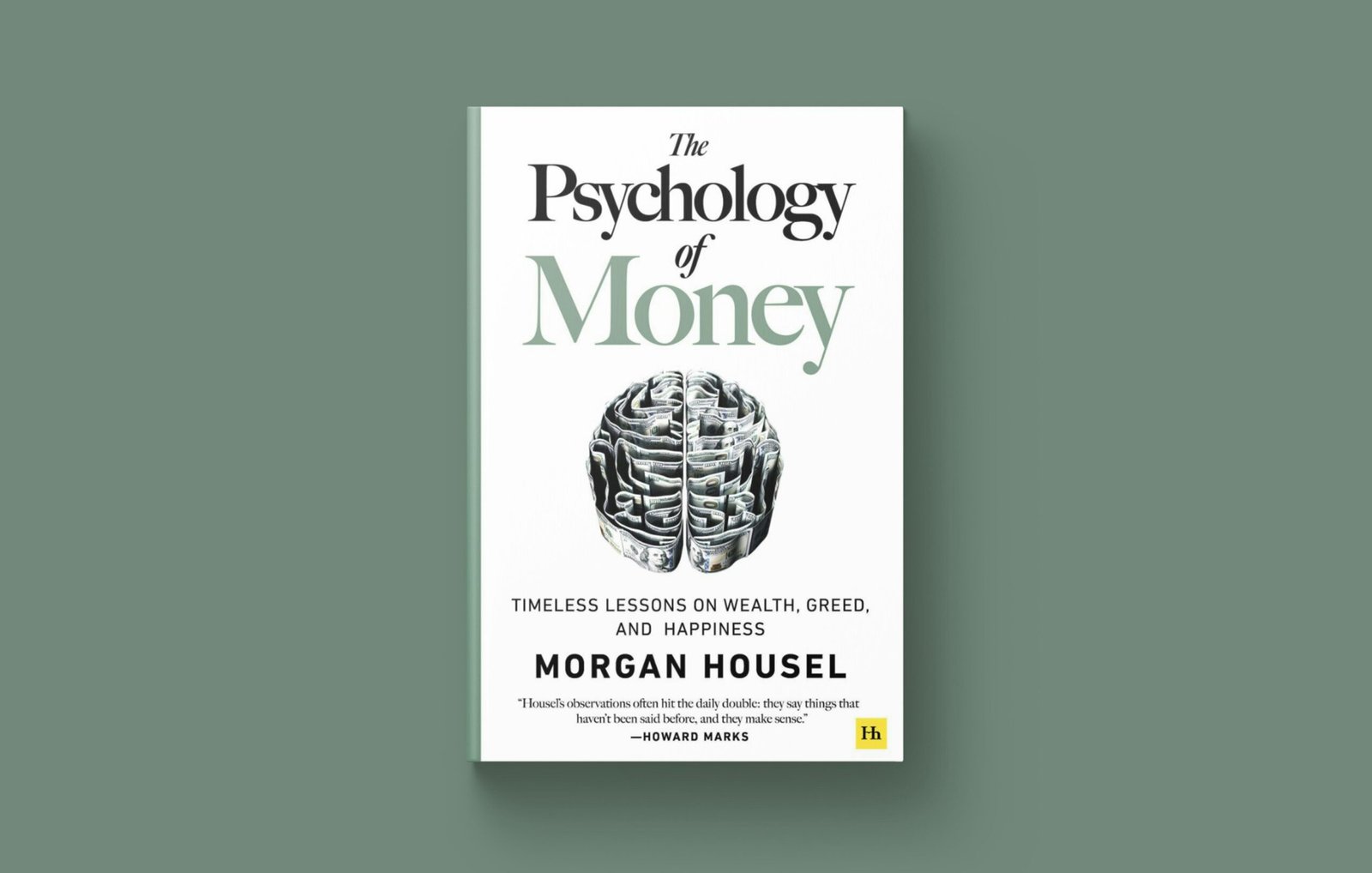
This is the question that sits at the heart of The Psychology of Money by Morgan Housel, and it’s also the question this blog is about. If you’ve been searching for a Psychology of Money summary that goes beyond a dry list of chapter titles, you’re in the right place.
By the end of this blog, you will understand the book’s central argument. Its ten most important lessons, how those lessons apply to real life in 2026, and whether the book is actually worth your time.
The Psychology of Money Summary
The Psychology of Money argues that financial success has less to do with what you know and more to do with how you behave.
Most personal finance content focuses on the technical side of money: spreadsheets, interest rates, portfolio allocation, tax strategy. Housel takes a different route. He argues that doing well with money isn’t really about intelligence. It’s about behavior. And behavior is hard to teach in a textbook, because it is shaped by things that have nothing to do with math, like fear, ego, pride, envy, and the specific financial experiences you happened to live through.
This is what makes the book different from a typical finance guide. It doesn’t try to hand you a formula. Instead, it tries to explain why two rational people can look at the same financial decision and reach opposite conclusions and why that doesn’t make either of them foolish.
That distinction is the foundation for everything else in the book, and it’s why this Psychology of Money book summary treats the ideas as a way of thinking, not a checklist.
What Is The Psychology of Money About?
At its core, the book is about the invisible forces that shape how we handle money; forces that rarely show up on a balance sheet.
Your relationship with money starts a lot earlier, before you got your first paycheck. It started much earlier, shaped by things like:
- The financial stability (or instability) you saw growing up
- The broader economic conditions during your formative years
- Personal wins and losses with money
- What your family believed about saving, debt, and risk
- Your natural tolerance for fear and uncertainty
- How much you compare your life to the people around you
- What you’re actually trying to build toward
Suppose two coworkers with identical salaries. One saves aggressively and lives frugally. The other spends nearly everything and takes on debt for vacations and upgrades. It is tempting to label one of them “smart” and the other “reckless.” But that’s often too simple. Maybe the saver grew up watching a parent lose a job during a recession, and security became non-negotiable. Maybe the spender grew up believing tomorrow isn’t guaranteed, so they’d rather enjoy today. Neither belief is irrational; it’s just built from a different set of experiences. That’s the quiet, important idea running through the whole book.
10 Key Lessons From The Psychology of Money
This section is the core of this Psychology of Money summary: ten ideas from the book, explained in plain language, with a real-world example and a practical takeaway for each.
Lesson 1: Nobody Is Crazy When It Comes to Money
People rarely make financial decisions at random. They make decisions based on the limited, personal slice of the world they’ve actually experienced. Someone who lived through a market crash in their twenties may avoid investing for decades not because they don’t understand compounding, but because their gut still remembers the loss. Someone else who never saw a downturn might invest aggressively without a second thought.
Why it matters: Judging other people’s money choices or your own past choices as simply “irrational” misses the real story.
Takeaway: Before judging a financial habit (yours or someone else’s), ask what experience might have shaped it.
Lesson 2: Luck and Risk Matter More Than We Think
Outcomes get attributed to skill far more often than they deserve. A successful investor might genuinely be skilled or they might have gotten unusually lucky timing. A person who lost everything might have made a poor decision or simply been unlucky. Housel’s point isn’t that effort doesn’t matter; it’s that we tend to overestimate how much control we actually have over outcomes.
Why it matters: Blindly copying someone’s financial success (or blaming yourself entirely for a setback) ignores the role chance plays in both.
Takeaway: Judge decisions by the process behind them, not just the result.
Lesson 3: Know When Enough Is Enough
Some of the most damaging financial mistakes come from people who already had enough but kept pushing for more risk, more return, more status. Without a clear definition of “enough,” ambition has no natural stopping point.
Why it matters: Chasing an ever-moving target of “more” is one of the fastest ways to put a stable financial life at risk.
Takeaway: Write down what “enough” actually looks like for you a number, a lifestyle, a feeling so you know when to stop chasing.
Lesson 4: Compounding Needs Time
Growth that looks unremarkable for years can become extraordinary simply because it was left alone long enough. The most powerful ingredient isn’t a high return it’s time uninterrupted by panic, impatience, or unnecessary withdrawals.
Why it matters: Many people abandon good long-term decisions too early because the early results feel underwhelming.
Takeaway: Judge a financial strategy by whether you can stick with it for years, not by how exciting it feels this month.
Lesson 5: Getting Wealthy and Staying Wealthy Are Different Skills
Building wealth often rewards boldness: taking a chance, starting a business, making a concentrated bet. Keeping wealth rewards the opposite: caution, humility, and a healthy respect for how quickly things can go wrong.
Why it matters: People who built wealth through bold risk-taking sometimes lose it by continuing to take the same risks after they no longer need to.
Takeaway: As your financial situation improves, gradually shift some of your focus from growth to protection.
Lesson 6: Wealth Is Often Invisible
The people who look the wealthiest new car, designer clothes, a big house are often the ones with the least left over, because it’s all been spent to create that appearance. Real wealth is usually the money you don’t see, because it was never spent in the first place.
Why it matters: Comparing your financial progress to someone’s visible lifestyle is comparing yourself to a performance, not a balance sheet.
Takeaway: Stop using visible spending as your measure of who’s doing well financially, including yourself.
Lesson 7: Saving Gives You Freedom
Saving isn’t only about funding a specific future purchase. It’s about creating options: the ability to change careers, take a break, handle an emergency, or say no to something without financial panic.
Why it matters: Money that isn’t tied to a specific goal is often the most valuable money you have, because it gives you flexibility when life is unpredictable.
Takeaway: Save some money with no fixed purpose attached, just for the freedom it provides.
Lesson 8: Being Reasonable Can Be Better Than Being Perfect
A mathematically optimal financial plan is worthless if you can’t actually stick to it. A “good enough” plan that you follow consistently for twenty years will usually outperform a perfect plan you abandon after two.
Why it matters: Personal finance is personal a strategy has to fit your temperament, not just a spreadsheet.
Takeaway: Choose the version of your financial plan you can realistically maintain, not the one that looks best on paper.
Lesson 9: Leave Room for Uncertainty
No one can predict the future with precision. Job loss, illness, sudden opportunities, market shifts the unexpected is not a rare exception; it’s a near-certainty over a long enough timeline. Plans that assume everything will go as expected tend to break at the first surprise.
Why it matters: A financial plan without a buffer for surprises isn’t really a plan; it’s a bet.
Takeaway: Build slack into your budget and savings so an unexpected expense doesn’t derail everything else.
Lesson 10: Think Long Term
Short-term emotional decisions panic-selling, chasing a trend, making a big purchase to feel better in the moment tend to undo years of otherwise sound decisions. Patience isn’t glamorous, but it’s consistently one of the most reliable financial advantages a person can have.
Why it matters: Most financial regret comes from reacting to a moment instead of sticking to a plan built for years.
Takeaway: Before a major financial decision, ask how you’ll feel about it in five years, not five days.
The Most Important Lesson From The Psychology of Money
If there’s one idea that ties the entire book together, it’s this: money is behavioral, not mathematical.
Knowing what you should do with money and actually doing it consistently are two completely different skills. Almost everyone knows they should save more, spend less than they earn, and avoid emotional decisions. Very few people can actually pull that off, month after month, year after year, especially when fear or excitement is involved.
Think about how this plays out in real life. You know spending less than you earn is basic math, but a bad week can still push you toward comfort spending. You know panic-selling during a market dip is a bad idea, but watching your savings drop can override that logic. You know comparing yourself to someone else’s lifestyle is pointless, but scrolling through vacation photos still stings a little.
This is why the book resonates with so many readers: it doesn’t treat financial mistakes as an intelligence problem. It treats them as a human problem, which means the solution isn’t more information. It’s better habits, more self-awareness, and more patience with yourself.
Wealth vs. Being Rich
One of the more clarifying distinctions in the book is the difference between being rich and being wealthy.
Being rich is visible: a nice car, a large house, expensive clothes, frequent travel. It shows current income and current spending. Being wealthy is invisible; it’s the income that wasn’t spent, sitting quietly in savings and investments, generating future options.
Someone can look rich and be financially fragile. Someone else can look completely ordinary and be financially secure. The expensive car doesn’t tell you what someone’s bank balance looks like; it usually tells you they had enough cash flow to make a monthly payment.
This distinction matters even more now, in a culture saturated with curated online lifestyles. Social media rewards the appearance of wealth, not the reality of it. Nobody posts a screenshot of their retirement account quietly growing. People post the vacation, the new car, the renovated kitchen. Confusing the two spending someone can see for wealth you can’t is one of the easiest financial mistakes to make without realizing it.
What The Psychology of Money Teaches About Saving
The book treats saving as something bigger than “money set aside for a future purchase.” Saving is really about buying yourself options.
A healthy savings habit can give you:
- Security during a job loss or income disruption
- Flexibility to take an unexpected opportunity
- Freedom to leave a situation that isn’t working
- Options you simply wouldn’t have otherwise
- Peace of mind during ordinary financial ups and downs
- Protection from a single bad month turning into a crisis
Importantly, the book doesn’t frame saving as deprivation. It’s not about denying yourself everything today for a distant, uncertain tomorrow. It’s about recognizing that money you haven’t spent is money that’s still working for you as flexibility, as a cushion, as time you can use however you need.
What The Psychology of Money Teaches About Investing
For beginners, the investing lessons in the book are less about picking the “right” investment and more about managing your own behavior around investing.
A few core ideas stand out:
- Compounding rewards patience far more than it rewards timing or prediction.
- Volatility is the cost of admission, not a sign that something has gone wrong.
- Risk tolerance is personal: what feels manageable to one person may feel unbearable to another, and that’s worth respecting.
- A margin of safety matters: leaving room for being wrong protects you from a single bad assumption wiping out years of progress.
- Emotional decisions are usually the most expensive ones, especially when made during a downturn.
None of this is a recommendation for specific stocks, funds, or strategies; the book intentionally stays away from that, and so does this summary. The real lesson is about temperament: successful long-term investing depends far more on staying calm and consistent than on being brilliant.
How To Apply The Psychology of Money To Everyday Life
Understanding the ideas is one thing. Actually using them is another. Here are practical actions you can start applying this week:
- Define what “enough” means for you specifically, not vaguely.
- Build a savings habit, even a small one, and make it automatic.
- Stop measuring your finances against people’s online lifestyles.
- Give long-term decisions time to work instead of judging them monthly.
- Avoid big financial decisions when you’re anxious, angry, or overly excited.
- Leave a cushion for the unexpected, because something unexpected always shows up eventually.
- Aim for consistency over a “perfect” plan you’re unlikely to stick with.
- Get honest about your own money history, what shaped your habits, and whether that’s still serving you.
- Separate genuine needs from wants dressed up as needs.
- Protect yourself from catastrophic mistakes the ones that undo years of progress in one decision.
The Psychology of Money and Modern Life
Housel’s ideas were written for a general audience. However, they land differently in the world we’re actually living in now, one shaped by social media, instant gratification, and constant visibility into other people’s spending.
Influencer culture has made lifestyle inflation feel normal and even aspirational. Online shopping has made impulsive spending frictionless. Hustle culture has convinced a lot of people that if they’re not constantly earning more, they’re falling behind. And social comparison, once limited to your neighborhood or workplace, now happens against a curated highlight reel of people you’ve never met.
This is exactly why financial psychology matters more today, not less. The math of saving and investing hasn’t changed. What’s changed is the pressure working against good financial behavior: more triggers for comparison, more opportunities for impulsive spending, more noise pulling people away from long-term thinking. Understanding your own psychology around money isn’t optional anymore. It’s a defense mechanism.
My Biggest Takeaways From The Psychology of Money
Reading this book felt less like learning new financial facts and more like recognizing patterns I hadn’t named before.
The idea that stuck with me most is that behavior beats intelligence when it comes to money. I’ve seen people with far more financial knowledge than me make worse decisions, simply because they couldn’t manage their own impulses. That reframed how I think about financial “skill”; it’s not really about knowing the most, it’s about staying consistent when it’s uncomfortable to do so.
The second idea that hit home is the invisibility of wealth. It’s easy to feel behind when you’re only comparing your bank account to other people’s visible spending. Once you accept that you’re not actually seeing anyone’s full financial picture, that comparison loses a lot of its power.
I also found the “getting wealthy vs. staying wealthy” distinction genuinely useful. It made me reconsider decisions I’d been making on autopilot, without asking whether the same level of risk still made sense for where I actually am now.
None of these ideas are complicated. That’s kind of the point. The book isn’t trying to make you smarter about money; it’s trying to make you more honest about how you actually behave with it.
Is The Psychology of Money Worth Reading?
Strengths:
- Explains financial concepts in genuinely accessible language
- Focuses on behavior instead of formulas, which is where most people actually struggle
- Uses relatable, memorable examples instead of abstract theory
- Works well for beginners with little to no finance background
- Reinforces long-term thinking over short-term reactions
Limitations:
- It’s not a step-by-step manual; don’t expect a specific investment plan
- Readers wanting detailed strategy (budgeting systems, tax planning, portfolio construction) will need additional resources
- The core message is repeated from several angles, which can feel a little repetitive if you’re reading cover to cover
To be clear, this book won’t make anyone rich, and it doesn’t claim to. What it offers is a better lens for thinking about the decisions you’re already making. That’s a smaller promise than most personal finance books make and probably a more honest one.
Who Should Read The Psychology of Money?
This book is a strong fit for:
- Students starting to think seriously about money for the first time
- Young professionals building early financial habits
- Freelancers and entrepreneurs managing irregular income
- Beginners who find traditional personal finance books too technical
- People interested in investing but unsure where to start
- Anyone who struggles to save consistently
- People who frequently compare their finances to others
- Anyone curious about why they make the money decisions they make
5 Things You Can Do After Reading The Psychology of Money
- Track where your money actually goes for one full month; awareness usually comes before change.
- Start saving consistently, even a small, automatic amount each month.
- Define what “enough” means to you, in specific terms, not vague ones.
- Stop measuring your progress against other people’s visible spending.
- Think in years, not days, when making decisions that matter long-term.
FAQ Section
What is The Psychology of Money about?
It’s a book by Morgan Housel about how behavior, emotion, and personal experience shape financial decisions often more than intelligence or income does. It argues that doing well with money is more about mindset and habits than technical knowledge.
What are the main lessons from The Psychology of Money?
Key lessons include recognizing that financial decisions are shaped by personal experience, understanding that luck and risk both play a role in outcomes, knowing when “enough” is enough, and prioritizing long-term patience over short-term reactions.
What is the main idea of The Psychology of Money?
The main idea is that financial success depends more on behavior than on formulas or intelligence. How you handle fear, patience, and consistency matters more than how much you technically know about investing.
Is The Psychology of Money good for beginners?
Yes. The book avoids technical jargon and complicated strategy, focusing instead on mindset and behavior. It’s often recommended as a starting point for people new to personal finance topics.
Is The Psychology of Money worth reading?
For most readers, yes, especially if you’re looking to understand your own financial habits rather than get a specific investment strategy. It won’t teach you how to pick investments, but it will change how you think about money decisions.
What does Morgan Housel say about wealth?
Housel distinguishes wealth from being rich. Being rich is visible spending; wealth is money that hasn’t been spent yet, which provides future options, security, and freedom.
What is the most important lesson from The Psychology of Money?
That money is behavioral, not purely mathematical. Knowing the “right” financial move and consistently making it are two very different things, and most financial struggles come from that gap.
How does psychology affect financial decisions?
Fear, ego, past experiences, and social comparison all influence how people spend, save, and invest — often more than logic does. Recognizing these influences can help you make calmer, more consistent financial decisions.
Conclusion
If you take one thing away from this Psychology of Money summary, let it be this: financial success isn’t primarily about how much you earn, how smart you are, or how much you know about investing. It’s about how you behave consistently, patiently, and honestly with the money you already have.
That means understanding yourself well enough to know what “enough” looks like. Making reasonable decisions instead of chasing perfect ones. Saving consistently, not just when it’s convenient. Managing risk instead of ignoring it. Giving your decisions the time they need to actually work. And using money less as a scoreboard against other people, and more as a tool for building freedom in your own life.
Morgan Housel’s book doesn’t hand you a formula for getting rich. It hands you something more useful: a clearer way of understanding why you do what you do with money, and a nudge to make sure those habits are actually working for the life you want, not just the life you’re comparing yourself to.